
Contract cleaning · Sydney and NSW
Commercial Cleaning Sydney Contractors Facilities Teams Can Audit
Clean Best holds contract cleaning scopes for offices, distribution centres, strata schemes, clinics and campuses across Sydney. Every site runs on a written scope, an after-hours roster and a named supervisor — and every submission arrives with the compliance pack already attached.
- Written scope of works, split by frequency band
- SWMS, insurance certificates and inductions before mobilisation
- One named operator per site, with an inducted relief
- No lock-in contract — 30 days notice either side brings it to an end
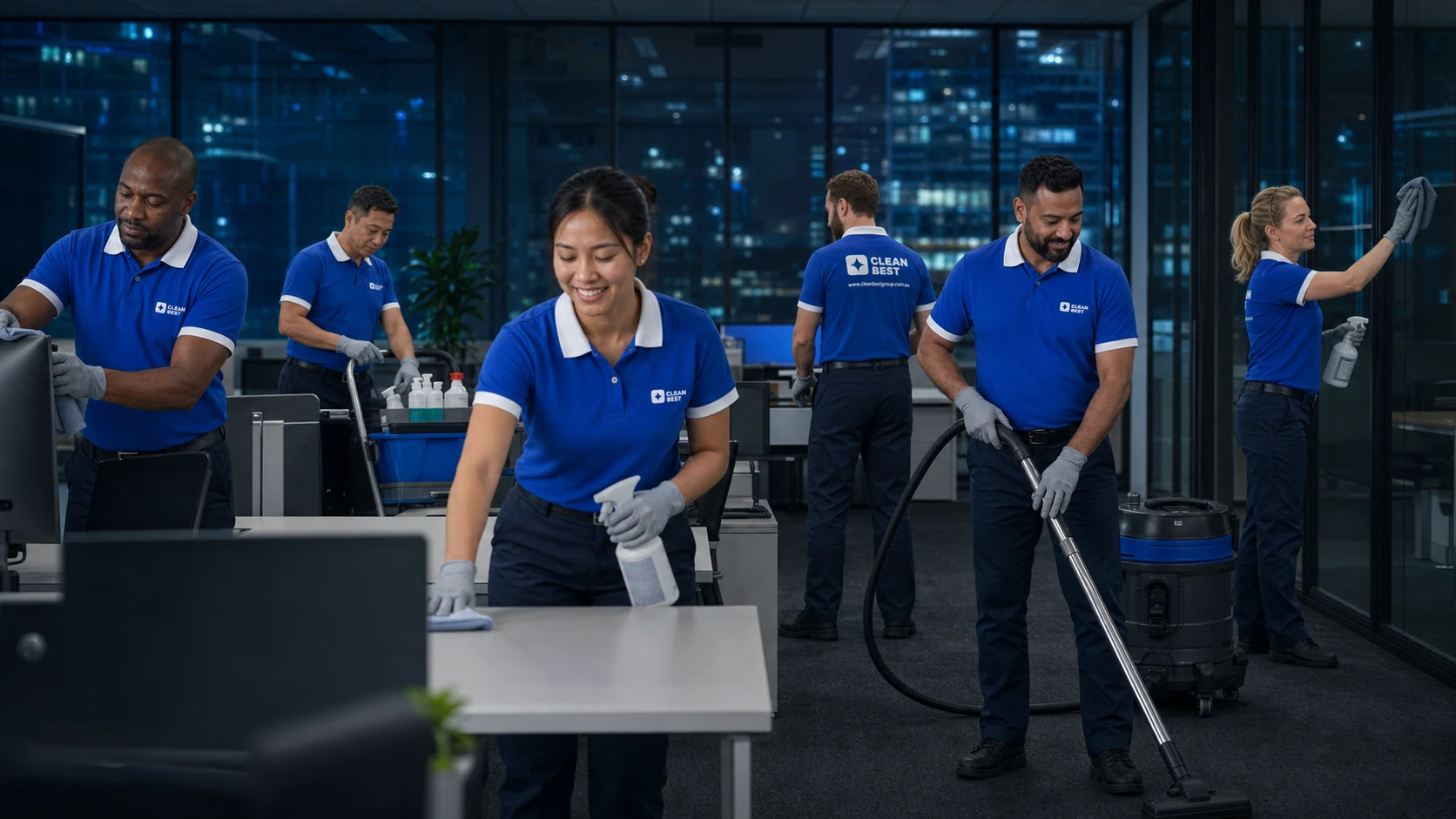
- 24 hoursWritten scope and fixed price after the site walk
- 18:00–05:00The window most of our contracts are delivered in
- $20m public liabilityCertificates issued before mobilisation, not after
What is a commercial cleaning contractor, and what should one supply before starting on site?
A commercial cleaning contractor is a company engaged under a standing contract to clean business premises, as distinct from a cleaner hired for a one-off job. The engagement is defined by a scope of works: the tasks to be performed, the frequency band each task sits in, the hours the work is delivered in, and the standard it is measured against.
Before an operator enters a site, a commercial cleaning contractor in New South Wales is normally expected to supply a certificate of currency for public liability insurance, a workers compensation certificate, a task-specific safe work method statement (SWMS) for every activity in the scope, a chemical register with safety data sheets for every product used, and police check confirmation for each rostered operator. Sites with children on them additionally require Working with Children Checks. These documents are what a supplier onboarding form or a prequalification portal asks for.
Clean Best is a commercial cleaning contractor based at 54 Columbia Rd, Seven Hills NSW 2147, working across Sydney and New South Wales. It attaches that compliance pack to the submission rather than supplying it after award, prices a site after an attended site walk, and returns the written scope and a fixed price within 24 hours. Call 02 5839 3012 / 0485 000 860.
Service levels
The service levels we commit to in writing
Most cleaning proposals promise quality and leave it there. These are the first three of the six measures we put in your contract schedule, and the evidence we produce against each one.
Quote turnaround
- What we commit to
- Written scope and fixed price back to you within 24 hours of the site walk, with the compliance pack attached.
- How it is evidenced
- Timestamped submission email; the scope document itself carries the date it was issued.
Roster reliability
- What we commit to
- Every rostered visit is attended. If your named operator is unavailable, the relief operator who has already walked your building attends instead.
- How it is evidenced
- Sign-in and sign-out records for every shift, available to your building manager on request.
Defect rectification
- What we commit to
- Anything reported below the agreed standard is rectified before the next scheduled visit, at no charge.
- How it is evidenced
- Rectification is logged against the scope line it relates to and confirmed to you by email.
- Contract cleaning since 2015Holding scopes across Sydney since 2015
- Police-checked cleanersInducted for offices, warehouses, strata, clinics and campuses
- $20m public liabilityCertificate of currency supplied before the first shift
- Written submission inside 24 hoursScope, roster and fixed price, all in writing
Scopes we hold
Twelve scopes, one supervisor, one invoice
Each of these is a contract we hold on Sydney sites today. The roster window on each card is the hour the work usually runs — it moves with your building's access rules, not with our convenience.
- Commercial Cleaning ContractsNightly, from 6pmContract cleaning held to a written scope of works, delivered outside trading hours and audited monthly against the frequency bands you signed off.See the commercial cleaning scope
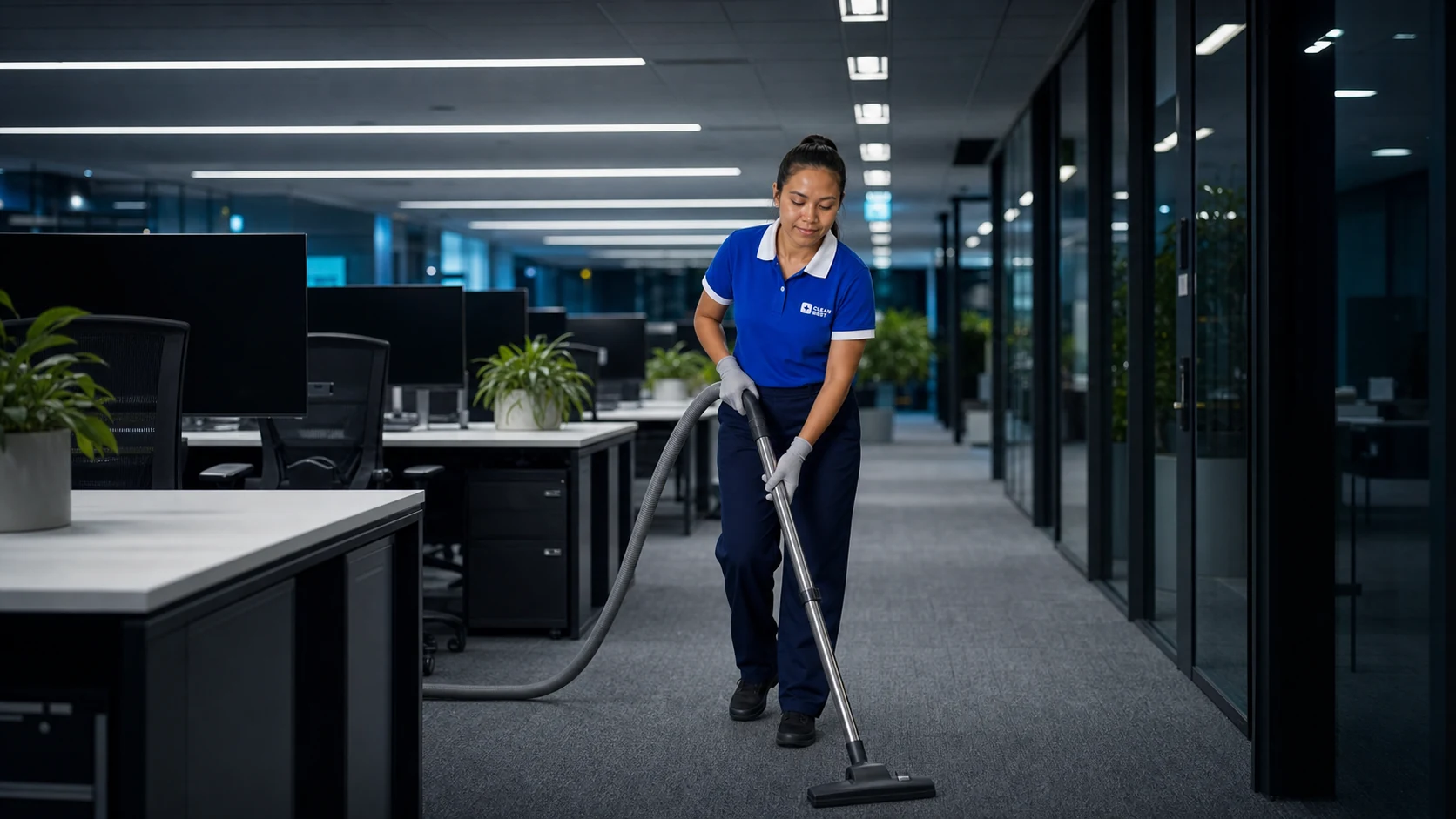 Office Cleaning ContractsNightly, from 6pmTenancy cleaning for corporate floors, with day-porter cover available and a scope that separates nightly work from the quarterly programme.See the office cleaning scope
 Warehouse Cleaning ContractorsBetween shifts or weekendsDistribution centre and industrial cleaning with ride-on scrubbers, racking dusting and dock work rostered between shift changeovers.See the warehouse cleaning scope
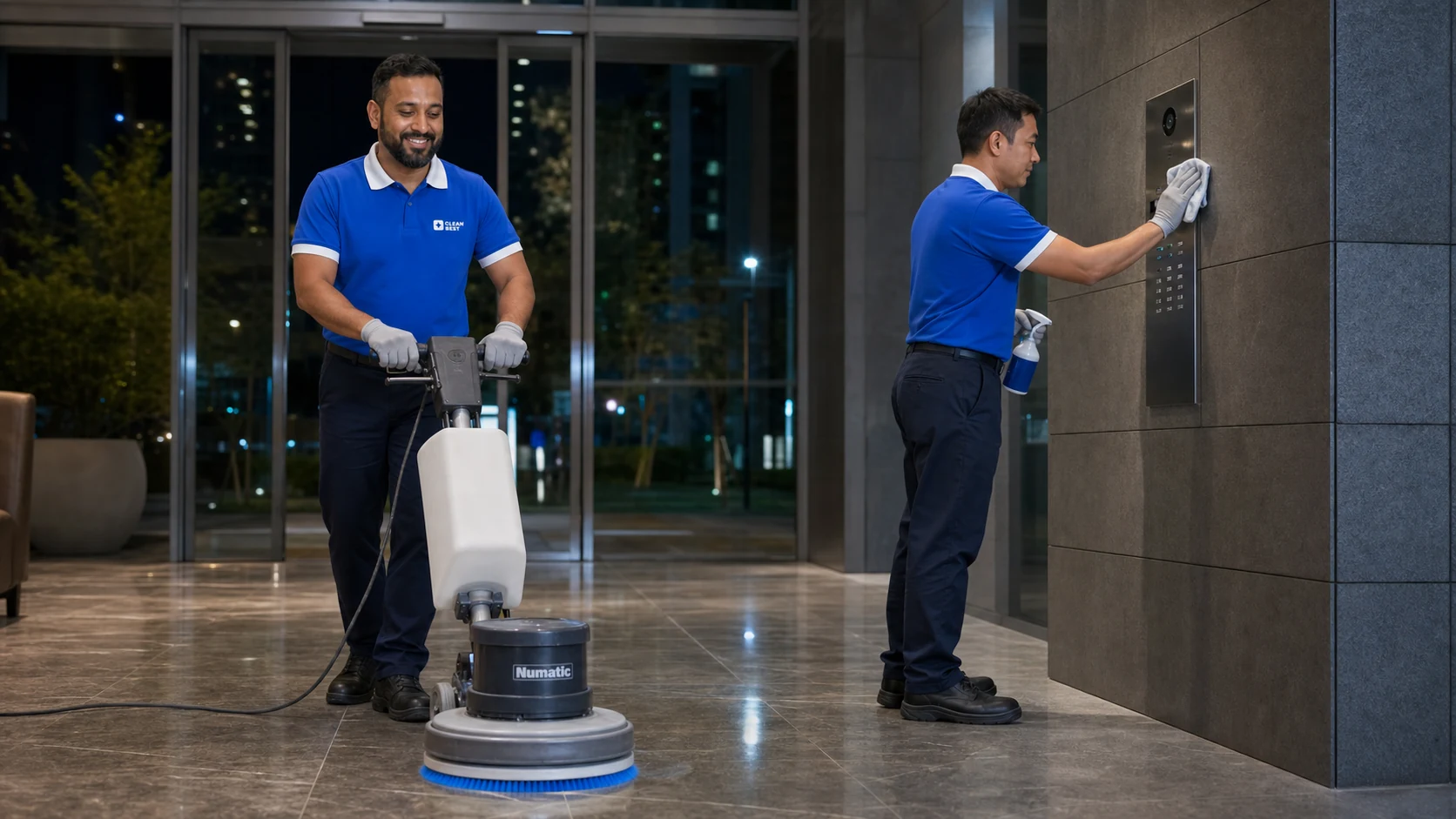 Strata Cleaning ContractorsWeekday morningsCommon-property cleaning reported to the building manager and the committee, with bin-room rotations and a photographic record each month.See the strata cleaning scope
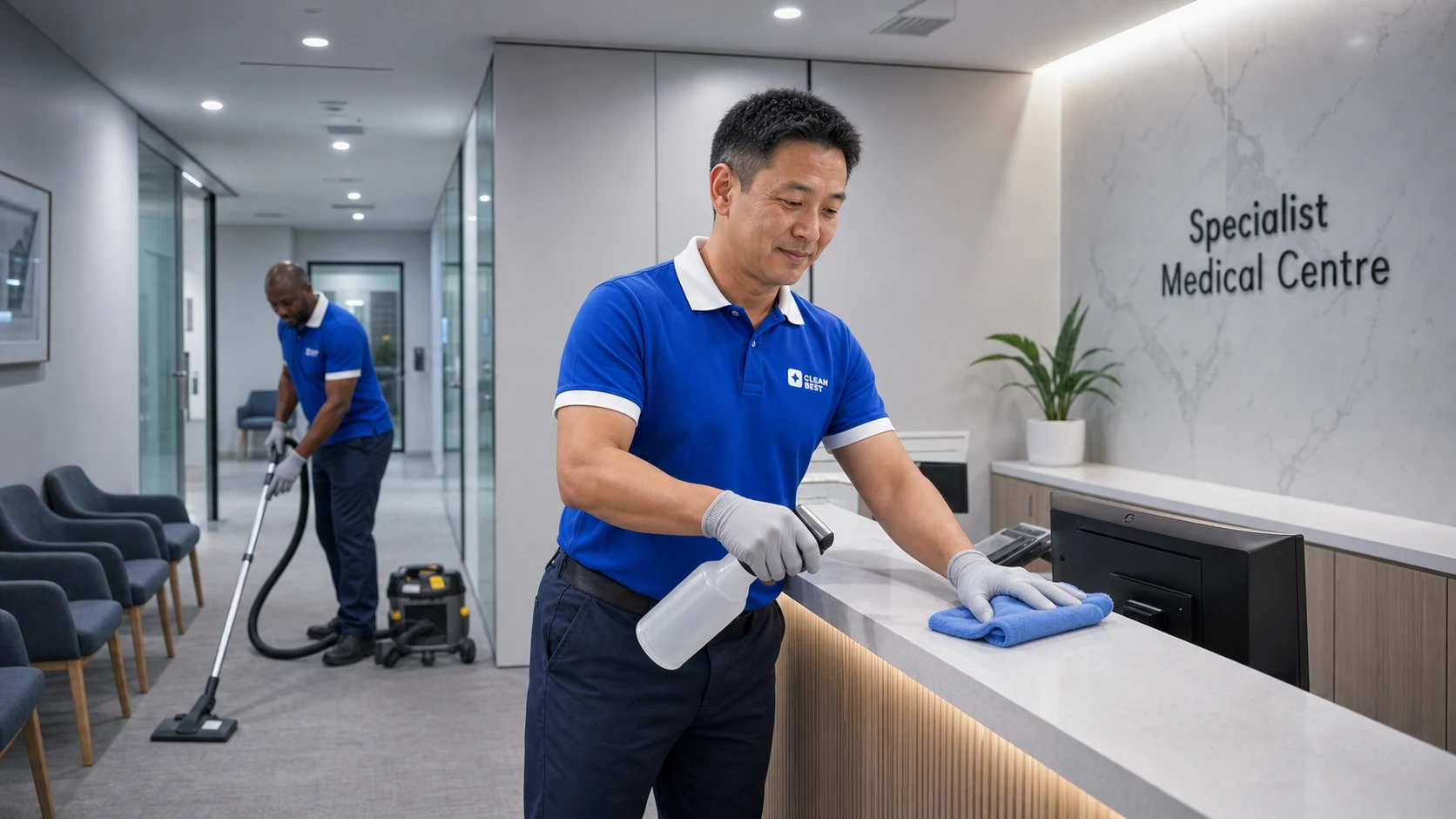 Medical Centre Cleaning ContractsAfter last appointmentInfection-control cleaning documented to a colour-coded method, with a signed register the practice can hand straight to an accreditation surveyor.See the medical cleaning scope
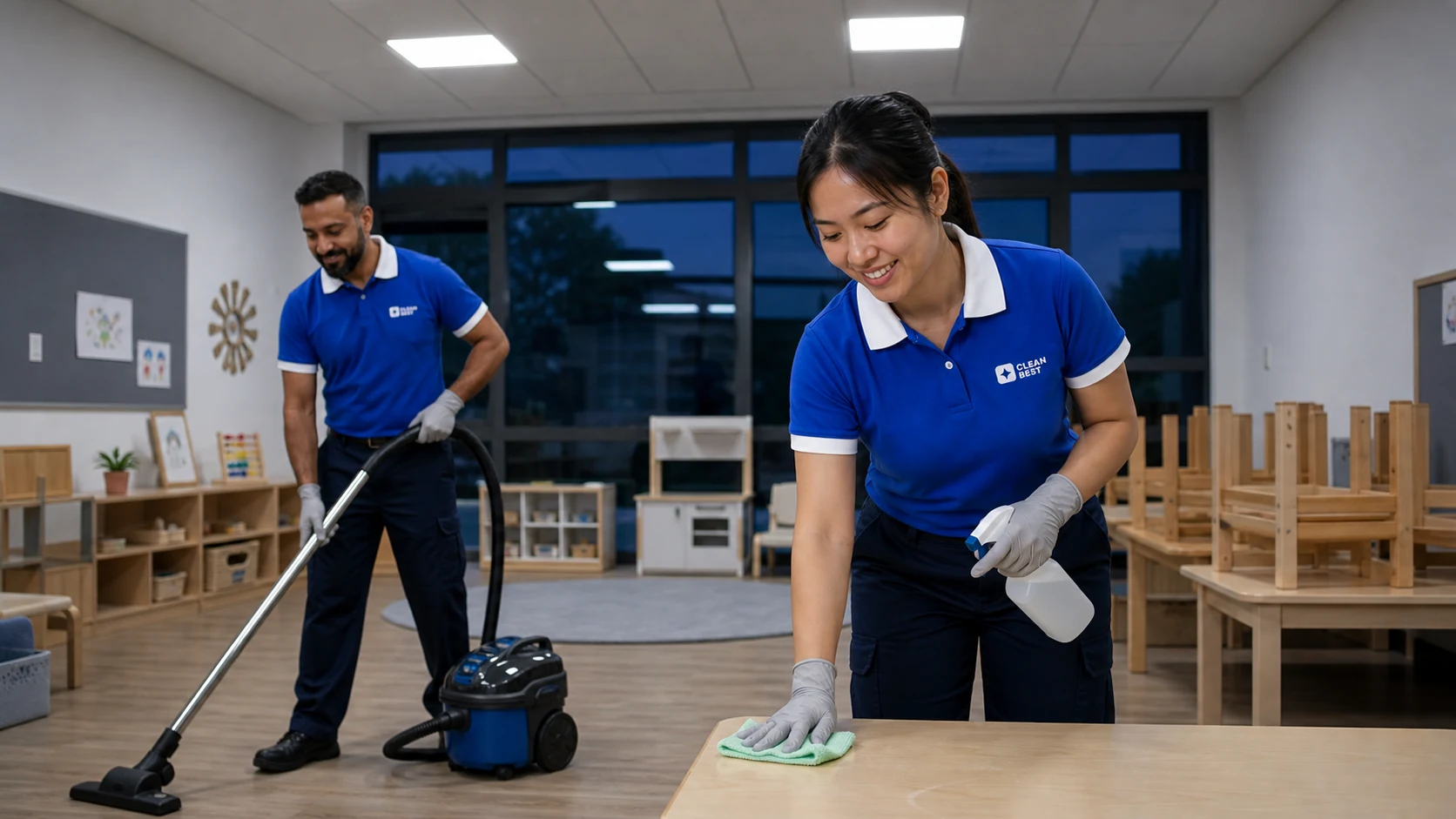 Childcare Cleaning ContractorsOvernight, after 6.30pmOvernight early-learning cleaning by WWCC-cleared operators, with a sanitising log the approved provider can produce at assessment.See the childcare cleaning scope
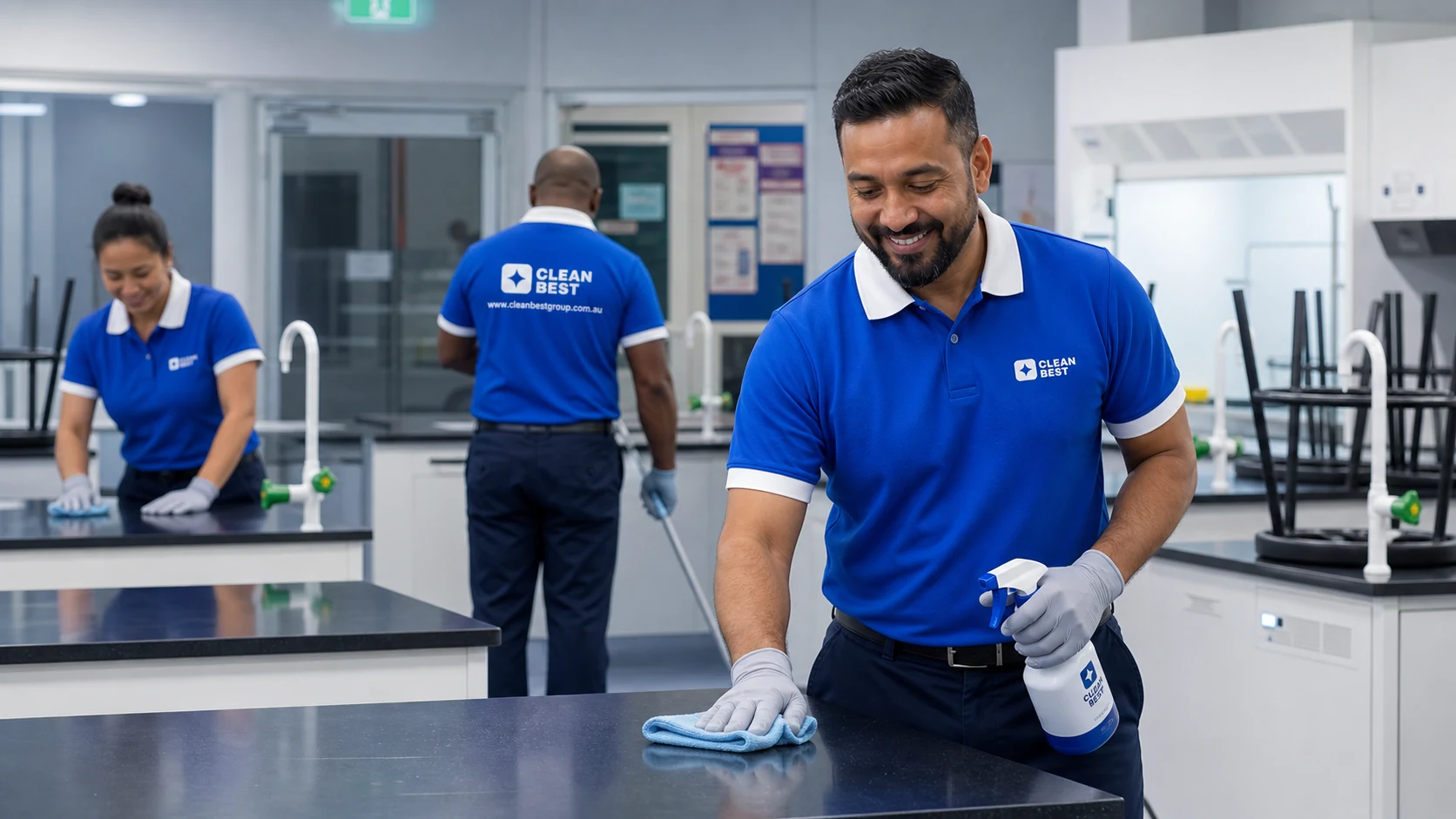 School Cleaning Contracts & TendersAfter bell, term weeksTerm-time and vacation-period cleaning for campuses, priced as two separate frequency bands so the holiday deep clean is never a surprise variation.See the school cleaning scope
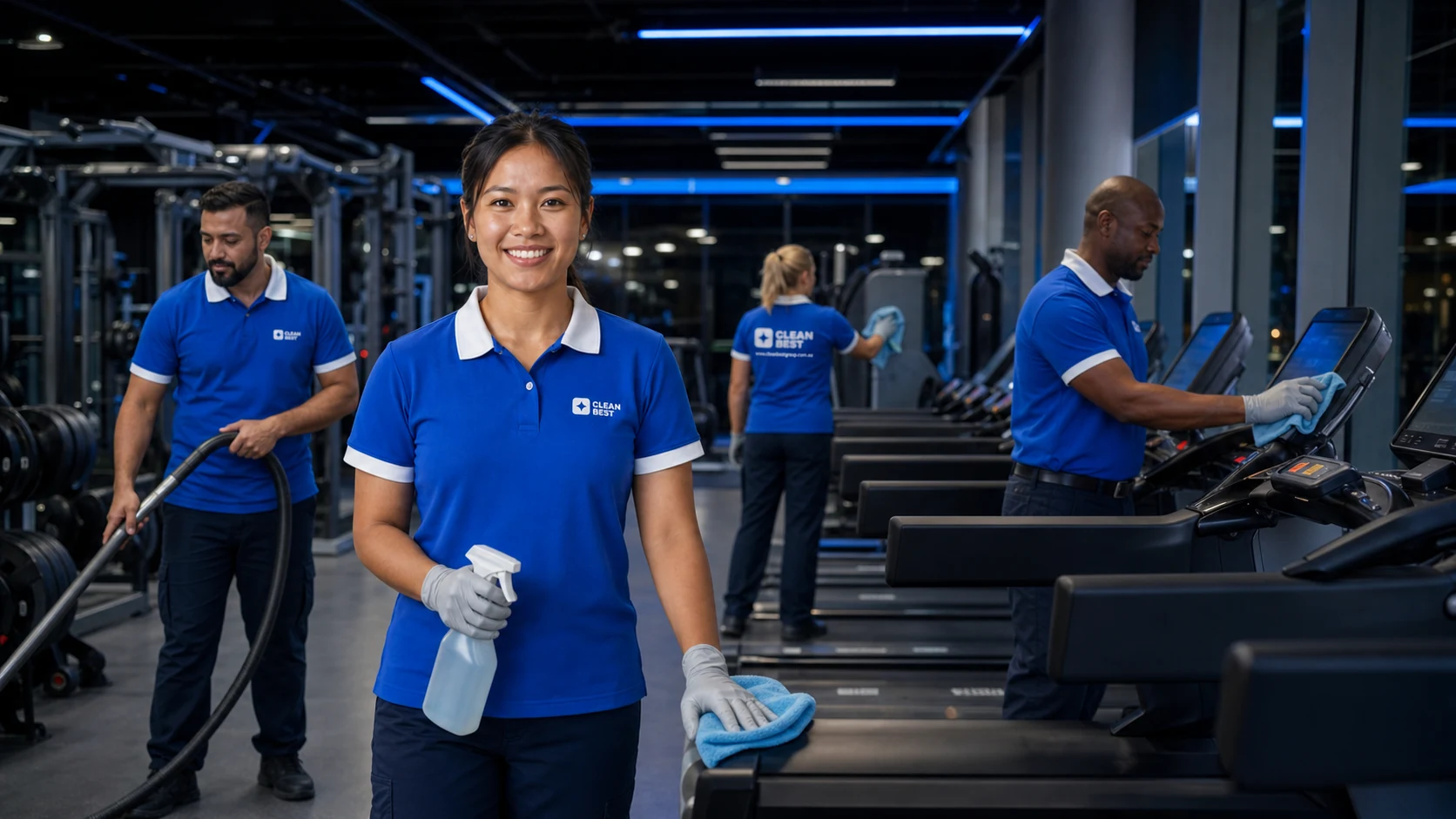 Gym Cleaning ContractsPre-dawn, from 4amPre-dawn cleaning for fitness sites and 24-hour clubs — equipment sanitising, rubber flooring, wet areas and the change rooms members judge you on.See the gym cleaning scope
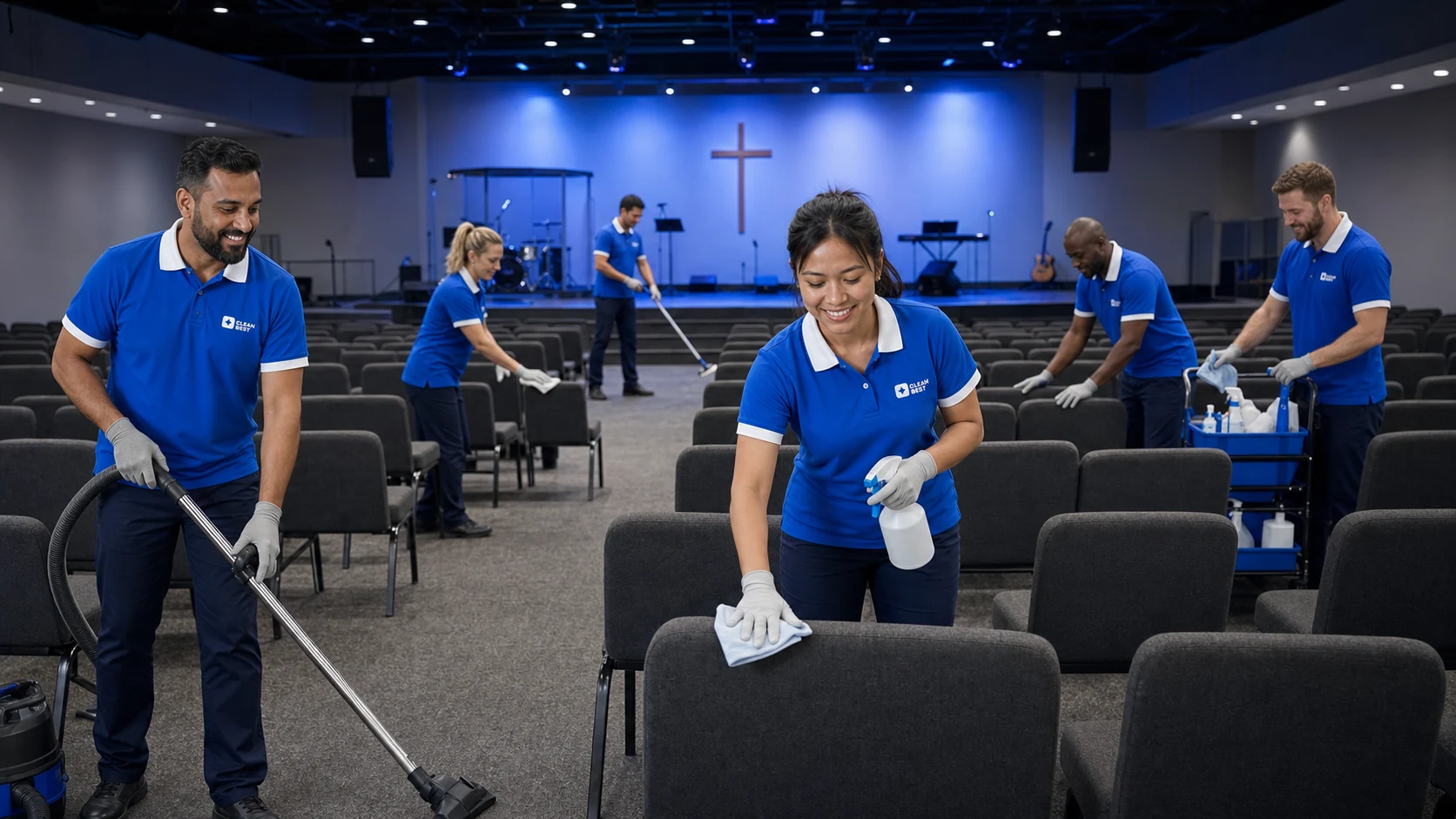 Church Cleaning ContractsMidweek, between servicesPlaces of worship and their halls, cleaned around the service calendar and the hire bookings the parish office runs during the week.See the church cleaning scope
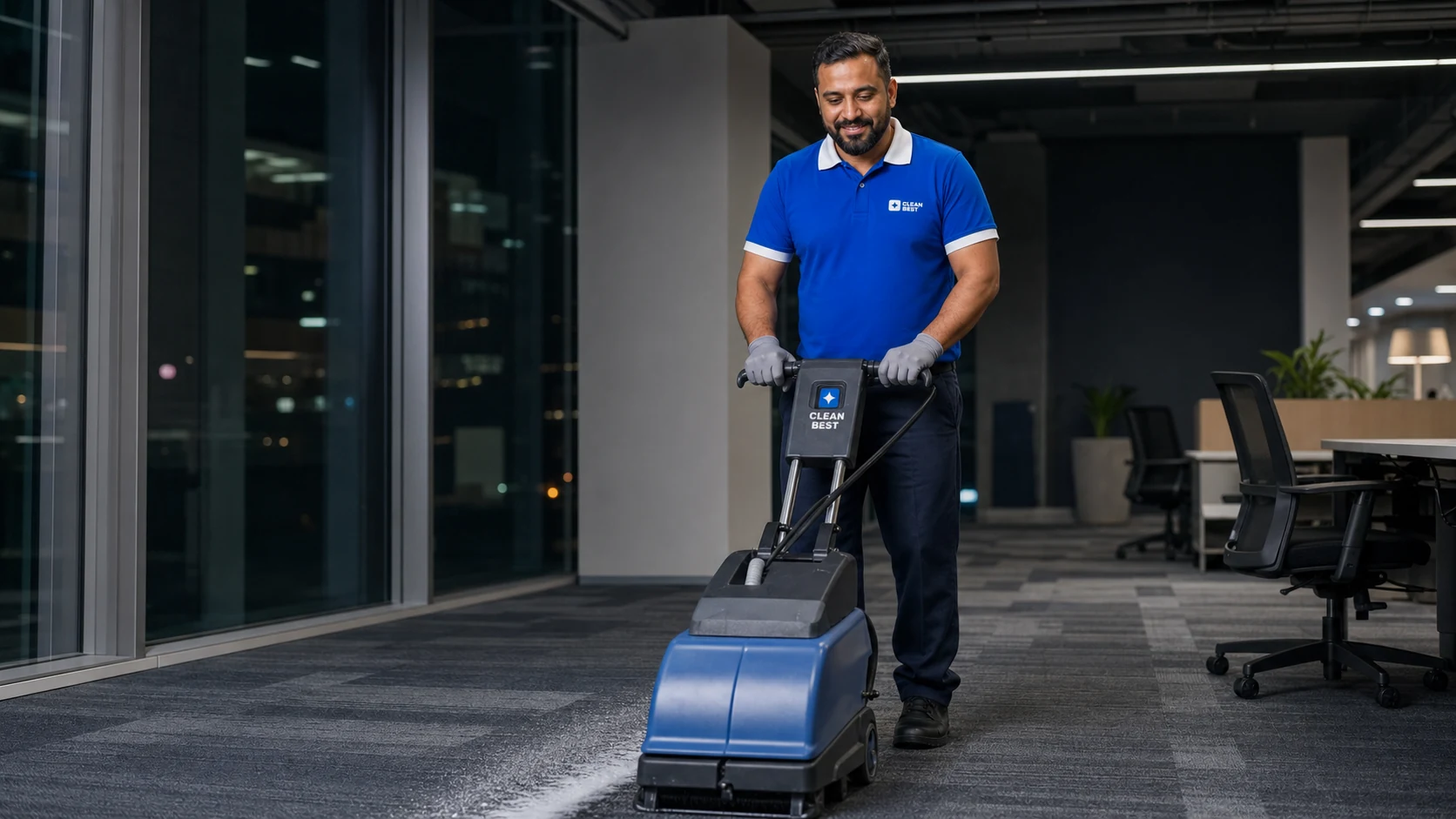 Commercial Carpet Cleaning ContractsWeekends, by zonePeriodic hot-water extraction for tenancies and common property, scheduled by zone so no floor is ever fully out of service.See the carpet cleaning scope
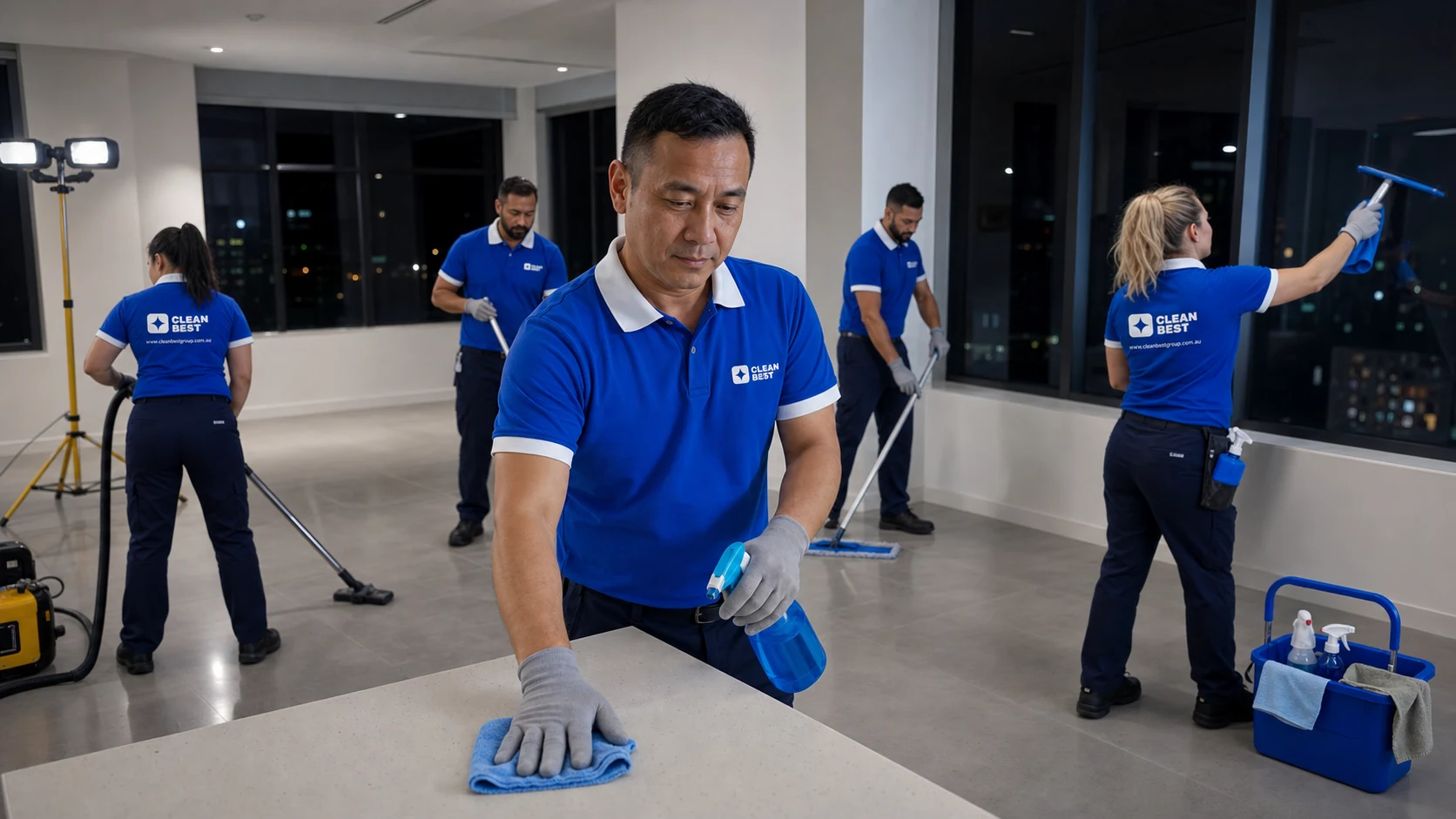 Make Good & Exit Cleaning ContractsBooked to your handoverMake-good and exit cleaning for tenancies and rentals, worked against the outgoing condition report so the handover inspection has nothing to find.See the end of lease scope
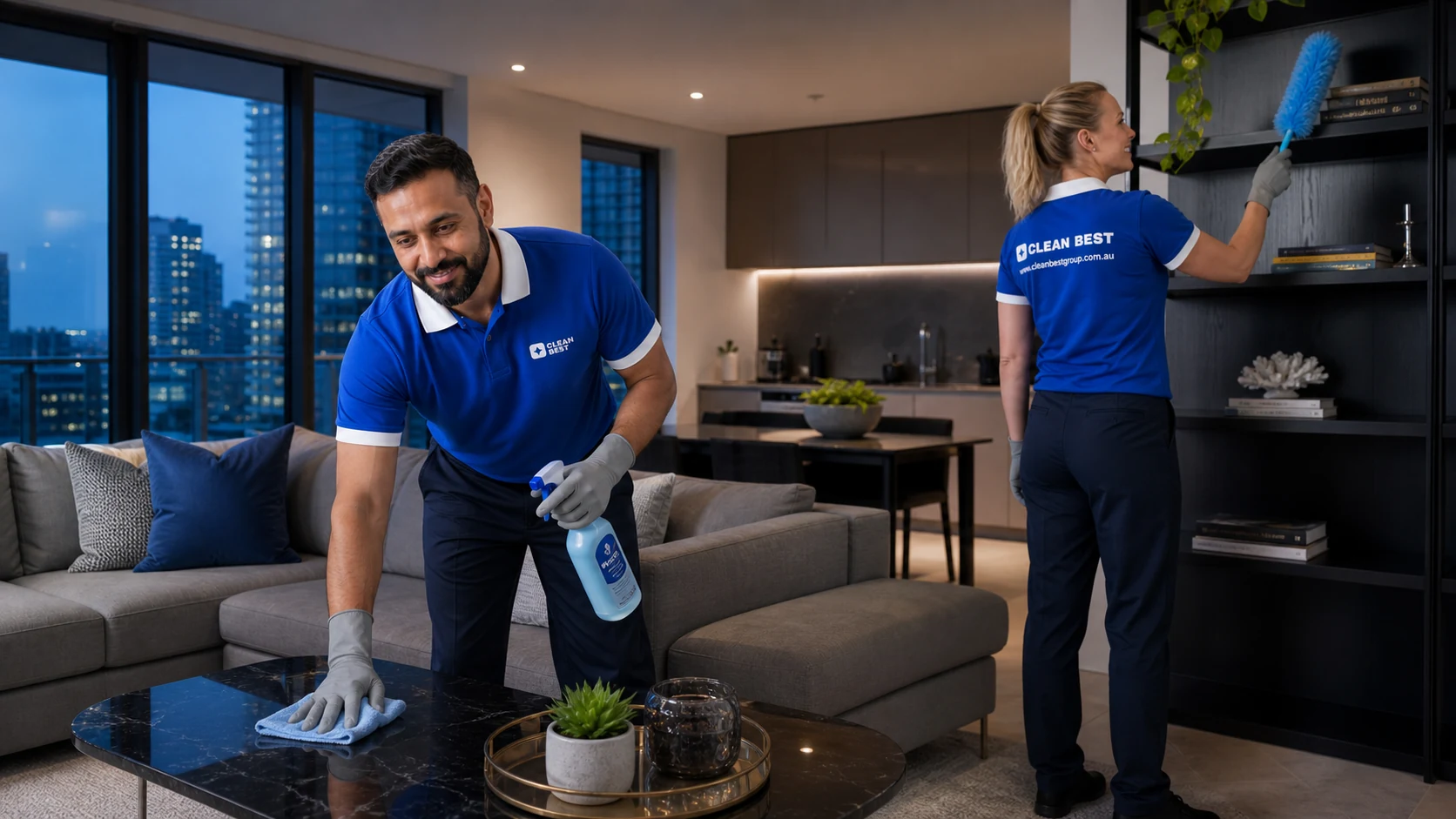 Home Cleaning ContractsWeekly or fortnightlyResidential rounds run on the same rostering discipline as our contracts — one named operator, a written task list, and a supervisor above them.See the home cleaning scope
After-hours roster
What actually happens on your floor between 18:00 and 05:00
This is a standard weeknight on a mid-size Sydney tenancy. The times move with your building's access rules — the sequence does not.
- 18:05
Sign in at the console, not the front door
The operator presents at building security or uses the access method written into your scope — swipe, key safe, concierge log, whichever it is. The entry is recorded against their name, so if your building manager ever asks who was on level 4 at half past eight, there is an answer rather than a shrug.
- 18:20
Waste and amenities first, while the building is still warm
Bins, recycling and the washrooms are done at the top of the shift, not the bottom. It is the work that most often gets rushed when a shift runs late, so we front-load it. Consumables are restocked to the level in the scope, not to whatever is left in the cupboard.
- 19:30
Floors, in the order that lets them dry
Hard floors are mopped away from the exit and the wet-floor signage stays up until they are dry, because the one person still working late is exactly who slips. Carpet is vacuumed under and behind the desks, along the skirtings, and through the breakout areas where the crumbs actually are.
- 20:45
The rotating band — the tasks nobody sees until they are missed
High dusting, vents, partition glass, the tops of screens, the fridge, the microwave. These sit in the weekly, monthly and quarterly bands of the scope rather than in every visit, and the operator works the band that is due tonight. It is written down, so it is not a matter of memory.
- 21:40
A lift is called, and the log records it
After-hours lift and door movements are the thing building management scrutinises. Our operators do not prop fire doors, do not let anyone in behind them, and do not lend an access card to a colleague. If an alarm is triggered, they call it in themselves before your monitoring company calls you.
- 22:15
Secure and sign out
Lights off, doors locked, alarm set, exit logged. The shift is closed against the scope, and anything the operator could not complete — a room left occupied, a locked comms cupboard — is noted so it appears in the monthly audit instead of quietly disappearing.
- 04:50
The pre-open pass, on sites that need one
Gyms, clinics and reception-heavy tenancies often run a short pre-open visit instead of, or as well as, the evening shift. It covers the amenities, the entry glass and the floor the first person walks across. It is priced as its own band, never smuggled into the nightly figure.
If you have never seen the shift your building runs after you leave, ask your incumbent contractor for the sign-in records for last month. The answer, or the absence of one, is usually the whole story.
Tenders and procurement
Ready for your supplier onboarding form before we quote
Most cleaning contractors send the certificates after they win the work, which is how a mobilisation date slips by three weeks. We attach the pack to the submission. If your organisation has its own prequalification portal, give us the link and we will complete it before the site walk.
- Day 0Brief received by phone, email or the form
- Within 48 hrsSite walk attended, at the hour the work would run
- Within 24 hrs of the walkScope, fixed price and compliance pack submitted
- Before the first shiftInductions completed and access procedure signed off
Attached to every submission
- Certificate of currency — $20m public liability
- Workers compensation certificate of currency
- Task-specific SWMS for every activity in the scope
- Chemical register with safety data sheets for every product
- Police check confirmation for each rostered operator
- Working with Children Checks where the site requires them
- Written scope of works broken out by frequency band
- Referee contacts at comparable Sydney sites
Anything else your prequalification requires, ask for it by name. If we do not hold it, we will tell you that rather than let you find out at contract award.
Industrial and distribution
Sites that never close, rostered into the gaps that actually exist
A distribution centre does not have an after-hours window, it has a changeover. So we roster into it. Ride-on scrubbers run the main aisles between the last pick and the first pick, racking is dusted on a zone rotation rather than in one heroic annual pass, and the dock is cleaned when the dock is not a traffic corridor. The plan is built from your shift pattern, not imposed on it.
The WHS exposure on an industrial site is what separates a contractor who has done this from one who has read about it. Wet floors are drying floors, and a drying floor beside a forklift route is a serious problem. Our operators work with a sequence and signage that keeps a walkway open, they hold task-specific SWMS for machine work, and they do not improvise around a hazard because the shift is running late.
- Ride-on scrubbing between shift changeovers
- Racking and high-level dusting on a zone rotation
- Task-specific SWMS for every machine operation
- Dock and yard work scheduled clear of traffic routes
Why Clean Best
What a facilities manager is actually buying
Nobody signs a cleaning contract because they are excited about cleaning. They sign it because they want to stop thinking about it, and to have an answer ready when somebody upstairs asks a question. These six things are what produce that.
A scope you can hold us to
The document you sign lists every task and the band it sits in: every visit, weekly, monthly, quarterly. When something is missed you can point at the line rather than argue about what was implied, and so can we.
$20m public liability and the paperwork behind it
Certificates of currency for public liability and workers compensation, task-specific SWMS, a chemical register with safety data sheets. It goes to your building manager and your procurement team before mobilisation, not after they chase it.
Named operators, not a labour pool
The same inducted operator works your site for the term. They are police-checked before the first shift, hold a WWCC where the site demands one, and are covered by a rostered relief operator who has already walked the building.
Monthly audit, in writing
A supervisor walks the site every month against the signed scope and sends the findings whether or not you asked. Anything below standard is rectified before the next scheduled visit at no charge, and the record is yours to keep.
One invoice, no variations by stealth
Everything in the scope is in the monthly figure. Periodic programmes such as carpet extraction or hard-floor restoration are quoted and scheduled up front, so a large number never lands in your inbox unannounced in month four.
No lock-in term
The agreement rolls month to month on 30 days notice from either side. We would rather hold the site because the audits are clean than because a clause makes leaving expensive. It also keeps us honest in year two.
Mobilisation
From first call to first shift, in about a week
Four stages. The dates below are the ones we hold ourselves to, and the ones you should hold any contractor to.
- Stage 1
Brief the site
Call 02 5839 3012 or send the brief form. We want floor area, surface mix, amenity count, access rules, incumbent arrangement and the frequency you have in mind.
- Stage 2
Walk it with you
We attend the site inside 48 hours, ideally at the hour the clean would actually run. Bins full, floors used. That is the building we are pricing.
- Stage 3
Scope and fixed price
Back to you within 24 hours: a written scope split into frequency bands, the fixed figure, and the compliance pack attached so procurement is not chasing us for it.
- Stage 4
Induct and mobilise
Operators are inducted on your access procedure and site rules before their first shift, and the named supervisor audits the site at the end of the first month.
Strata and common property
Common property, and the committee meeting you would rather not attend
Strata cleaning fails in a specific and predictable way: the lobby looks fine, the bin room does not, and six months later the contract is on the agenda at a committee meeting nobody wanted to have. The bin room, the fire stairs and the car park are where the complaints come from, so those are the areas we put on a documented rotation and photograph, rather than the ones we leave to the end of the shift.
Building managers get the record without asking. Every month the supervisor walks the common property against the scope, notes what was found, and sends it through — which means that when the committee does ask, you are the person in the room holding the evidence rather than the person promising to look into it.
- Bin rooms, fire stairs and car parks on a documented rotation
- Monthly photographic record sent to the building manager
- Access and after-hours rules written into the scope
- One supervisor across every building in your portfolio
FAQ
What facilities managers and procurement teams ask us
The questions that come up before a commercial cleaning contract gets signed, answered as directly as we can put them.
What does a commercial cleaning contract with Clean Best actually commit you to?
It commits us to a written scope, a fixed monthly figure and a named supervisor. The scope lists every task against a frequency band — every visit, weekly, monthly or quarterly — so nothing lives on in somebody's memory. The agreement itself rolls month to month on 30 days notice from either side. There is no minimum term, no exit fee and no automatic annual uplift buried in a clause. If the audits stop being clean, you should be able to leave.
Can you respond to a formal tender or an RFQ within our submission window?
Yes, and we would rather do it properly than quickly. Send us the documents and the closing date. We attend the site inside 48 hours, return the priced scope 24 hours after that, and attach the compliance pack — insurance certificates of currency, workers compensation, SWMS, chemical register and police check confirmations — to the submission rather than waiting to be asked. If your organisation runs a prequalification portal, give us the link and we will complete it before the site walk.
Who is liable if a cleaner damages something or triggers an alarm after hours?
We are, and we carry $20m public liability cover plus workers compensation for every operator on the roster to make that meaningful rather than theoretical. Certificates of currency go to your building manager before the first shift and are reissued to you as they renew. Operators call an accidental alarm activation in themselves before your monitoring company can call you — the worst outcome after hours is not the alarm, it is finding out about it second-hand at 7am.
How do you handle building inductions and site access?
Access is written into the scope document before anybody starts: swipe card, key safe, alarm code, concierge sign-in, lift restrictions after a certain hour, loading dock cut-offs. Each operator is inducted on that procedure individually, and on any site-specific induction your building or your organisation requires. Entries and exits are logged against the operator's name, so when building management asks who was on a floor at a given hour there is a record rather than a guess.
What happens when our regular operator is on leave?
A relief operator who has already walked your building covers the shift. That is the whole point of having them walk it in advance — a stranger handed a key at 6pm on a Tuesday learns your site by making mistakes on it. The relief operator is inducted on the same access procedure, holds the same clearances, and works the same written scope. Your supervisor tells you before the swap rather than after you notice.
Do you subcontract the work, or are the cleaners employed by Clean Best?
The operators on your site are ours, rostered by us and supervised by us. This matters more than it sounds: a subcontracted chain is how a site ends up with an operator nobody has police-checked, an insurance certificate that covers a different entity, and a supervisor who has never set foot in the building. When you escalate something, it reaches the person who can actually fix it, because they work here.
Can you clean around a site that never fully closes?
Most of the sites we hold do not close. Distribution centres run shifts, gyms open at five, clinics have patients until late, strata common property is never empty. We roster into the gaps rather than pretending they do not exist: between shift changeovers, before the first class, after the last appointment. Wet floors are managed with signage and a drying sequence that keeps a walkway open, because the person still on site is exactly who slips.
How do we know the work was actually done on a night nobody was there?
Three ways, none of which require you to take our word for it. Sign-in and sign-out records exist for every shift and are available to your building manager. The named supervisor walks the site monthly against the signed scope and sends you the findings whether or not you raised anything. And anything the operator could not complete on the night — a locked room, an occupied office — is noted at sign-out so it appears in the audit rather than quietly vanishing.
Find Clean Best Group in Seven Hills
Our Seven Hills base supports commercial cleaning across Sydney and NSW. Find our location, contact the Clean Best Group team or request a written quote.
Clean Best Group
54 Columbia Rd, Seven Hills NSW 2147, Australia
Clean Best Group
54 Columbia Rd, Seven Hills NSW 2147
Brief us on the site, and get a commercial cleaning contractor procurement can sign off
Call 02 5839 3012 / 0485 000 860 or send the brief. We walk the site inside 48 hours and return the scope, the fixed price and the compliance pack 24 hours after that.