
Tenancy contracts
Office Cleaning Contracts in Sydney
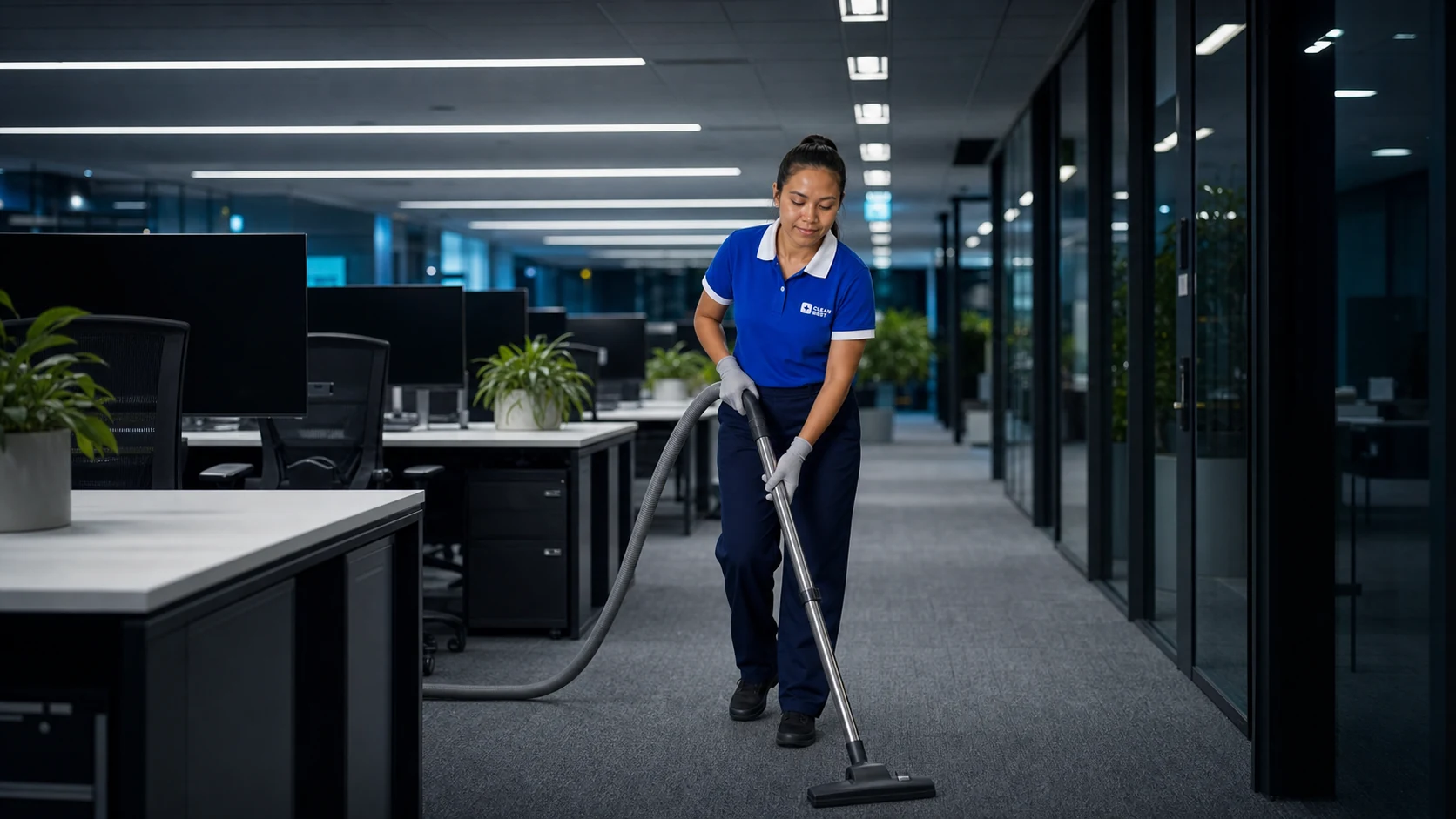
Contract cleaning for Sydney office tenancies, delivered after your floor empties and finished before it fills. Desks, kitchens, meeting rooms, washrooms and end-of-trip facilities — every one of them written into a scope with a frequency band against it.
- Every task closed out before the first badge swipe of the day
- Day porter cover available for reception, kitchens and washrooms
- End-of-trip facilities on a documented rotation
- Entries and exits logged against the operator's name
Engagement summary
- Roster window
- Nightly, from 6pm
- Insurance
- $20m public liability, certificate on file
- Turnaround
- Written submission inside 24 hours
- Agreement
- Rolling, 30 days notice either way
What does an office cleaning contract cover in Sydney?
An office cleaning contract covers scheduled cleaning of a commercial tenancy, normally performed after business hours. The recurring tasks are waste removal, kitchen and breakout cleaning, washroom sanitising and restocking, vacuuming and mopping, wiping of desks and meeting rooms, touchpoint disinfection and entry glass.
Less frequent tasks sit in separate bands rather than being performed every visit: internal glass and skirtings weekly, high dusting and vents monthly, ledges and cable trays quarterly. Frequency is set by headcount and amenity load rather than floor area — offices above roughly twenty-five staff generally require a nightly roster.
Clean Best prices office cleaning after an evening site walk and issues the scope and fixed monthly figure in writing within 24 hours on 02 5839 3012.
- Contract cleaning since 2015Holding scopes across Sydney since 2015
- Police-checked cleanersInducted for offices, warehouses, strata, clinics and campuses
- $20m public liabilityCertificate of currency supplied before the first shift
- Written submission inside 24 hoursScope, roster and fixed price, all in writing
The detail
An office cleaning contract Sydney tenancies can hold a contractor to
What tenants actually raise about an office cleaning contract in Sydney is rarely a disaster in the making. It is a drift. The bins are still emptied. The floor still gets a pass. But the kitchen sink has developed a film, the boardroom table has ring marks, the carpet under the desks has not met a vacuum head in a month, and the shower in the end-of-trip facility has started growing something. Nobody escalates any of it, because individually none of it justifies a phone call. Then a client sits in the boardroom and you see the room the way they see it.
That drift has a cause, and it is nearly always the same one: nobody ever wrote down what the weekly and monthly work was. So it fell off the end of the shift, quietly, one task at a time.
Frequency comes from headcount, not from square metres
Cleaning gets priced on floor area because floor area is easy to measure, not because it predicts anything. A three-hundred square metre floor with eight people and one with forty are entirely different jobs, and a schedule written for the first will be destroyed by the second within a fortnight. We ask how many people sit on the floor, how many use the kitchen daily, whether the washrooms are internal or base-building, whether the office hot-desks, and how much of the day’s grit walks in on the entry mat. Then we recommend a frequency, and we say so plainly if the one you had in mind is too light.
The kitchen and the washroom decide the contract
The complaint that reaches a facilities manager is almost never about the carpet. It is the sink full of mugs nobody will claim, the microwave nobody wipes, the fridge that has developed an opinion, the washroom out of hand towel at four in the afternoon. So those rooms go at the top of the shift, not the bottom, because the work at the bottom of a shift is the work that gets rushed when the shift runs late. Benchtops, sinks, taps and splashbacks every visit. Fridge exteriors and microwave interiors nightly, with a full fridge clear-out on a cycle you nominate. Consumables restocked to a level, not to whatever happens to be left.
Meeting rooms, breakout and end-of-trip
Meeting rooms get tables, chair bases and arms, whiteboards erased properly rather than smeared, AV touchpoints disinfected, and the fingerprints taken off the partition glass everybody leans on. Breakout soft furnishings are vacuumed and spot-cleaned. End-of-trip facilities — now a genuine lease negotiation point in Sydney — get showers, screens, drains, benches and locker fronts on a rotation designed to stop mould establishing, because removing it is an order of magnitude harder than preventing it. Where those facilities are base-building rather than in your tenancy, we will tell you, so you take the conversation to the right party.
Desks, and the limits we will not cross
We wipe desk surfaces that are clear and dust monitor stands, keyboards, phones and cable trays on the agreed rotation. We do not move paperwork, open drawers or touch personal belongings. That is a firm line, and a contractor who offers to cross it is handing you a future incident report. Tenancies that want their desks genuinely clean run a clear-desk night once a week — we will write it into the scope and prompt the floor the afternoon before, which is usually all it takes.
Access, and the record of who was on your floor
Before the first shift we document exactly how the operator enters: swipe, key safe, alarm code, concierge sign-in, whatever lift restrictions apply after six. Each operator is inducted on that procedure individually and every entry and exit is logged against their name. They do not prop fire doors, they do not let anyone in behind them, and they do not lend an access card to a colleague. If an alarm is triggered, they call it in themselves before your monitoring company calls you.
How this scope sits alongside the rest of the network
Clean Best also publishes a general-service brand site, and if you are researching office cleaning Sydney from the point of view of a small business owner rather than a facilities team, you may find that framing more useful than this one. The service is the same. The document this page is written for is not.
What it costs to find out
A free walkthrough of the floor, ideally at six in the evening when the bins are full and the kitchen has been used, because that is the office we would actually be cleaning. A written scope and a fixed monthly figure back within 24 hours, split into nightly, weekly and quarterly bands so you can see exactly what you are buying. A rolling agreement on 30 days notice. Call 02 5839 3012.
Corporate portfolios
One supervisor across every floor you hold
Organisations with offices in three Sydney buildings usually have three cleaning arrangements, three standards and three invoices, which is how a facilities team ends up spending its week reconciling paperwork instead of managing assets. We would rather hold all of them: a separate written scope per site, because the buildings genuinely differ, but one supervisor, one escalation number and one consolidated invoice across the lot.
It also makes the audits comparable. When the same supervisor walks all three floors against three scopes built to the same discipline, a standard that is slipping in one building becomes visible immediately rather than after a tenant complains. That is worth more than any per-square-metre saving you will negotiate out of a second contractor.
- A separate written scope per building, one supervisor across all
- Consolidated invoicing and a single escalation contact
- Comparable monthly audits across the whole portfolio
- Inductions completed per building before mobilisation
Scope of works
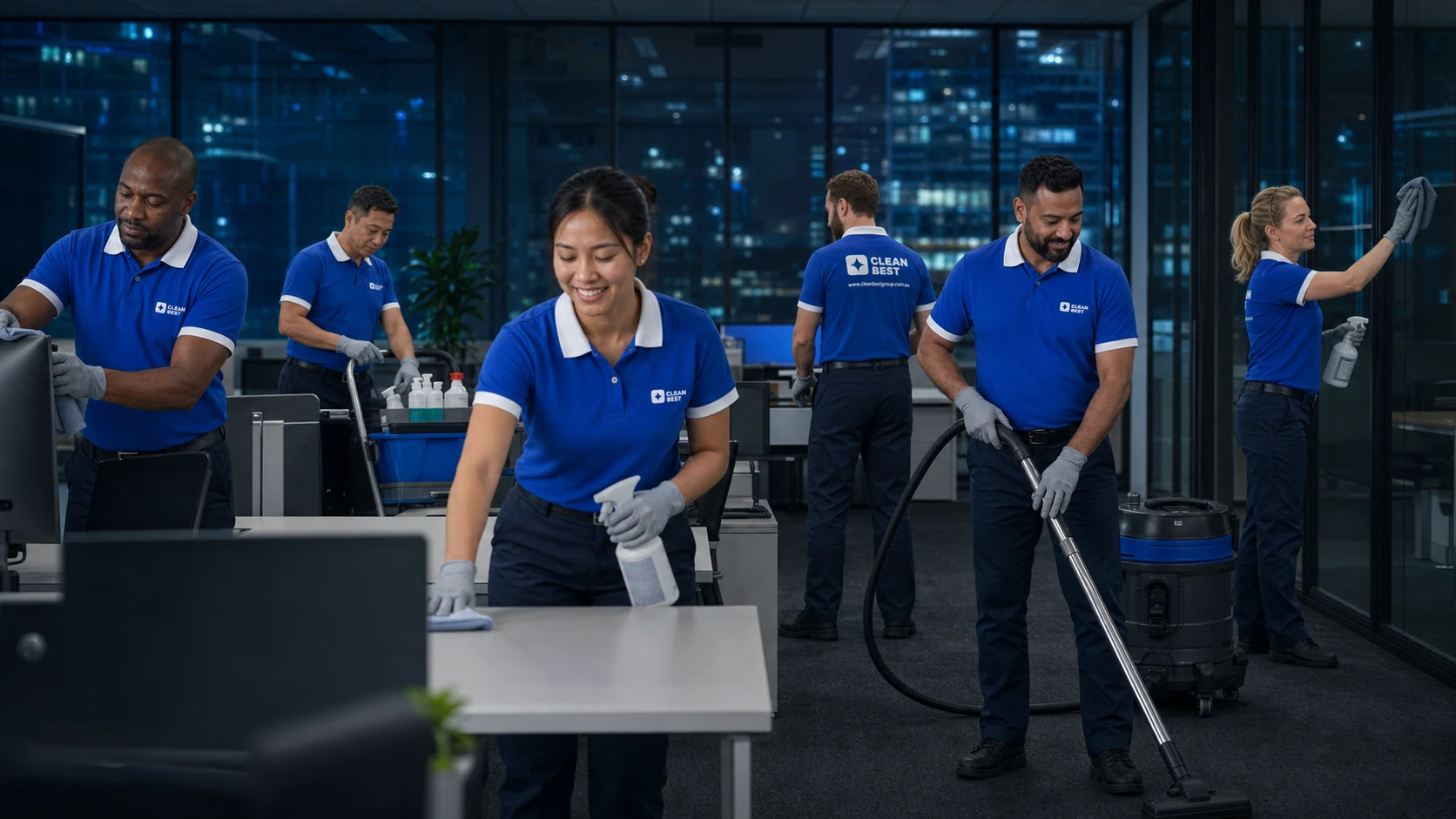
What sits in an office cleaning scope
The shape a typical Sydney tenancy scope takes. Yours is written from the evening walk — the bands will move, the discipline will not.
- Waste and recycling collected from every desk and communal point, liners replaced, contents carried out to the building's bin room
- Kitchen benchtops, sinks, taps, splashbacks and cupboard fronts cleaned and disinfected on every visit
- Fridge exteriors and handles wiped down nightly, microwave interiors cleaned, dishwasher unloaded where that sits inside the scope
- Washroom pans, urinals, basins, mirrors and partitions sanitised; paper, soap and hand towel restocked to the level you set
- End-of-trip showers, screens, drains, benches and locker fronts cleaned on the rotation written into the scope
- Carpet vacuumed throughout, including under and behind desks, along skirtings and through the breakout zones
- Hard floors mopped in kitchens, washrooms and entries, worked back toward the exit with wet-floor signage left up until dry
- Cleared desk surfaces wiped down; monitor stands, keyboards, phones and cable trays dusted on their agreed rotation
- Meeting rooms covered each visit: tables, chair bases and arms, whiteboards wiped clean, remotes and AV touchpoints
- Fingerprints and smudges lifted from internal glass, partition screens, glass doors and mirrors
- Touchpoint disinfection run across door handles, light switches, lift buttons, printer panels and tap handles
- Reception detailed: counter, entry glass, entry mats and visitor seating
- Monthly band: high dusting, air vents, light diffusers, ceiling corners and the tops of screens
- Floor secured before the operator signs off — lights off, doors locked, alarm armed, entry and exit logged
Priced separately and scheduled up front: carpet extraction, hard-floor restoration and external window cleaning. Base-building amenities outside your tenancy are the landlord's contractor's scope, not ours — we will tell you at the walk which is which.
Commercial terms
How an office cleaning contract gets priced
Three bands by the shape of the tenancy. The figure itself comes from the evening walk and arrives in writing before anybody starts.
Single suite
One tenancy, up to roughly twenty desks, one kitchen and washrooms shared with the base building.
- Two or three rostered evenings a week
- Waste, kitchen, floors and entry glass every visit
- One named operator across the whole term
- Consumables restocked from your cupboard or supplied by us
Fixed figure, issued in writing before mobilisation.
Open-plan floor
Roughly twenty to eighty desks with meeting rooms, breakout space and internal amenities inside the tenancy.
- Nightly roster finished before the first arrival
- Meeting rooms, breakout and end-of-trip facilities in scope
- Named supervisor with a written monthly audit
- Weekly, monthly and quarterly bands documented separately
Fixed figure, issued in writing before mobilisation.
Multi-floor tenancy
Corporate tenancies across several floors, or an organisation holding offices in more than one Sydney building.
- Dedicated crew with building-specific induction records
- Day porter add-on across reception, kitchens and washrooms
- Carpet and hard-floor programmes scheduled by zone
- One supervisor, one site register, one consolidated invoice
Fixed figure, issued in writing before mobilisation.
Free site walk, then a written scope and fixed price inside 24 hours.
Mobilisation
How we take over an office cleaning contract
Four stages. Most Sydney tenancies are walked inside 48 hours of the first call and mobilised within the week.
- Stage 1
Send the floor plan and the headcount
Call 02 5839 3012 with desk count, amenity setup, building access hours, and the notice period on your current arrangement.
- Stage 2
We walk it after six
The floor we price is the floor our operator will meet: bins full, kitchen used, the day's grit already on the entry mat.
- Stage 3
Scope, price and compliance pack
Back within 24 hours. Every task against a frequency band, a fixed monthly figure, and the certificates attached rather than promised.
- Stage 4
Induct, then start the night after handover
Your operator completes the building induction and the access briefing before their first shift. The supervisor audits the floor at month one.
FAQ
Office cleaning contracts: what workplace teams ask
The questions that come up before a tenancy changes cleaning contractor.
How do you set the cleaning frequency for an office tenancy?
By headcount and amenity load, not by floor area. A quiet suite of ten people is usually right on two or three nights a week. Above roughly twenty-five people, or on any floor with a well-used kitchen and internal washrooms, a nightly roster is the only thing that holds — the bins and the sink will beat a three-night schedule by Thursday. We recommend a frequency at the site walk, and we review it at the end of the first month if we called it wrong.
Do you offer a day porter as well as the after-hours clean?
Yes, and on a high-traffic floor it is usually the better spend. A day porter covers reception, the kitchen, the washrooms and the end-of-trip facilities during business hours, while the full scope still runs after your team leaves. Daytime work has to be scoped differently — cordless equipment, no wet floors across a walkway, no strong-odour chemistry near desks — so we write it as its own band rather than doing an evening clean in daylight.
What is the position on desks and personal belongings?
We wipe desk surfaces that have been left clear and dust monitor stands, keyboards, phones and cable trays on the agreed rotation. We do not move paperwork, open drawers or handle personal items, and we do not clean under a desk buried in documents. Any contractor who offers to do otherwise is creating a problem for you. Offices that want their desks genuinely clean adopt a clear-desk night once a week, and we will write it into the scope and remind the floor the afternoon before.
Who cleans the end-of-trip facilities, us or the building?
It depends on the lease, and it is worth checking before you assume. Where the end-of-trip facilities sit inside your tenancy, they are in our scope: showers, screens, drains, benches, lockers and bike storage, on a rotation that stops mould establishing rather than removing it later. Where they are base-building, they are the landlord's contractor's problem — and if the standard there is poor, that is a conversation with building management, not with us.
Can you work with our building's after-hours access restrictions?
That is the normal case rather than the exception. Lift restrictions after 18:00, a concierge sign-in, a loading dock that closes at 22:00, an alarm with a call list, a swipe that only opens certain floors. All of it goes into the scope document before the first shift and each operator is inducted on it individually. Entries and exits are logged against their name, which is generally the point at which building management stops asking you who was on the floor at nine.
How is an office cleaning contract priced in Sydney?
There is no figure on this page and there will not be one, because a published rate can only be wrong. What drives an office clean is desk density, amenity count, kitchen use, surface mix and the number of entry points, and no two tenancies share them. We walk the floor in the evening when the bins are full, count what actually generates the work, and return a fixed monthly figure in writing within 24 hours. That figure is what appears on the invoice.
Our current cleaner is fine, but the standard has slipped. Is that worth switching over?
Sometimes it is a scope problem rather than a contractor problem, and switching will not fix it. If nobody ever wrote down what the weekly and monthly bands were, then the drift you are seeing is simply the tasks nobody agreed to falling off the end of the shift. Ask your incumbent for their scope document. If they cannot produce one, you have found your answer — and it is worth at least having somebody walk the floor and tell you what a real scope for it looks like.
Related scopes
Scopes offices commonly hold alongside the clean
All of it on the same roster, the same supervisor and the same invoice.
Sign an office cleaning contract your staff stop noticing, because nothing is ever wrong
Free evening walkthrough, written scope and fixed price in 24 hours, compliance pack attached. Call 02 5839 3012.